Construction Concept
Construction within the community is currently expected to involve the following features and would be designed for both everyday use and long term resilience.
- General construction
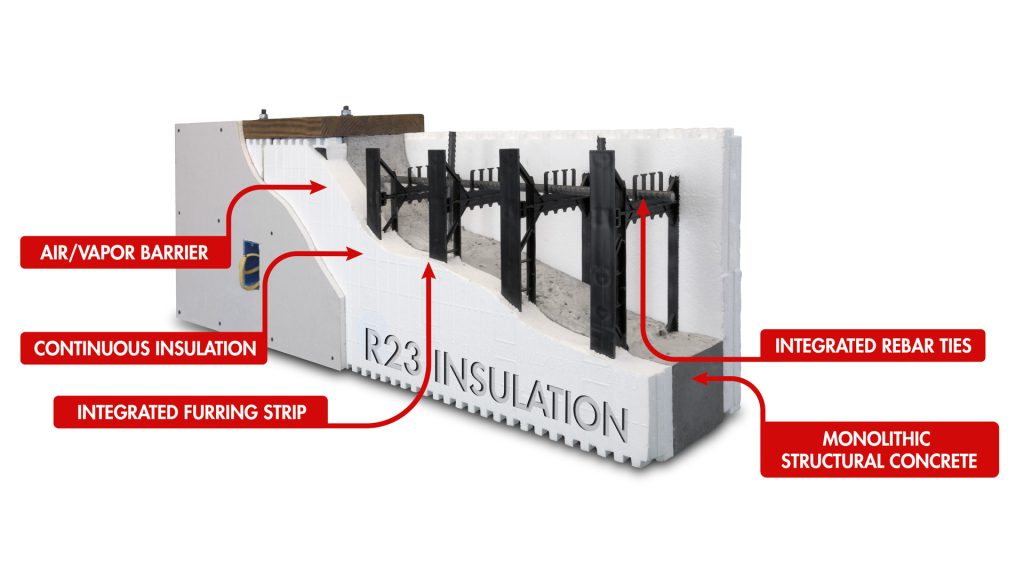
- For durability and energy savings, Insulated Concrete Forms (ICF) construction will be the main construction methodology used within the community. Generally used in higher end construction, it is more expensive per square foot, but also more durable and energy efficient than standard home construction.
- Architectural style
- The architectural style has yet to be determined. The extensive use of ICF construction will naturally lend itself to stucco for simplicity and durability, although ICFs can be finished in any desired interior or exterior finish.
- Roofing
- This will be determined later, but metal roofs and concrete decking are two very durable options to be considered.
- Electricity
- The power for most structures would be primarily independent off-grid solar. Some structures could potentially be grid-tied.
- Water
- Water would be from a variety of sources, although wells would be the primary source. Rainwater harvesting and a fire-reserve would be part of the water plan as well. Water utilities may make the most sense to be distributed within the community or within each zone rather than being too centralized. This has to be evaluated further. Water would most likely be individually metered.
- Waterless toilets
- Waterless toilets would be the primary toilet type used in the community other than maybe in the Enterprise Zone. We plan to produce a waterless toilet design that offers a traditional look and shape, but uses a few scoops of organic cover to eliminate smell. These waterless toilets would be constructed of either stainless steel or powdercoated steel in different color options. These would use accept standard toilet seats and have two compartments to separate solid and liquid waste. Once full, open the toilet cover and place a gamma seal lid on the bucket(s) that are full and load a fresh clean bucket in the toilet and close the toilet cover.
- Four main waste streams
- Residents would be asked to sort their waste into four main waste streams. These include organic matter, wastewater, recyclable plastics, and trash. This is really three resource streams and one waste stream. If there is enough usage of aluminum cans, these could potentially be sorted and saved as well.
- Composting organic matter
- Everything organic and biodegradable can be composted including food scraps, grease and fat, animal parts like chicken flesh and bones, and most paper. Paper laminated with plastic film should not be composted and cannot be recycled.
- Composting toilet waste and wastewater
- Toilet solids, toilet blackwater, and any gray water (things like water from sinks, tubs, and showers), can all be safely composted. All liquid and solid waste can be composted, processed, and aged appropriately until completely safe to reintroduce as compost and fertilizer.
- Plastics
- Residents would be asked to sort plastics into two streams: recyclable and non-recyclable. The recyclable plastics like milk jugs, soda bottles, and caps would be separated from the non-recycable plastics. This is easier than it sounds as recyclable plastics are typically coded and we would be happy to train and explain. The recyclable plastics would be sorted and shredded at the community waste center to save space. Non-recyclable plastics (or if you are not sure if it is recyclable) would be placed in the trash bin.
- Trash
- Trash is anything that doesn’t fall into one of the other three categories. Non-compostable, non-recyclable waste is trash. Trash collected would be placed into dumpsters at the community waste center until ready for traditional disposal in the county landfill. The sorting and recycling activity is expected to reduce the community’s overall waste output by 80+%
- Waste collection
- There would be color coded trash cans for the different waste streams and 5 gallon buckets with gamma seal lids for the toilet waste and other organic waste. There would probably be service twice per week, with trash cans and recyclables being serviced one day and composting buckets being placed at the curb on a different day. The service allows waste streams to be collected and centrally processed at the community’s Utilties, Waste, and Composting (UWC) facility. Full waste buckets would be placed into a designated area shielded from sight and would be collected and replaced with an equal number of fresh, clean buckets. Once emptied at the UWC facilty, the waste buckets would be sanitized and cleaned for swapping out during the next service pickup. If folks are sick or they are reasons not to compost their waste, then there is a simple protocol to dispose of their waste as trash rather than having it enter the community composting stream.
- Public-facing areas
- Public-facing areas may be required to use traditional septic systems and water flushing toilets. This still needs to be evaluated.
Feedback requested
We are looking for constructive input from people that are interested in our concepts, could possibly see themselves living in such a community, and people with experience in rural development, water systems, septic/wastewater, farming, off-grid power, construction, site planning, emergency management, hospitality, community governance, and other relevant skillsets, experience, and knowledge. All constructive criticism and feedback is appreciated.